UPOU Chancellor shares lessons on accessible education amid global disruptions


The OER Observatory aggregates and displays OER-related news and content from third-party sources worldwide. This content is not produced by UNESCO or the OER Dynamic Coalition. All rights and responsibility for the original content remain with the respective authors and publishers. The inclusion of third-party content in the Observatory does not imply endorsement by UNESCO or the OER Dynamic Coalition. Users can access the original source through the link provided with each item.
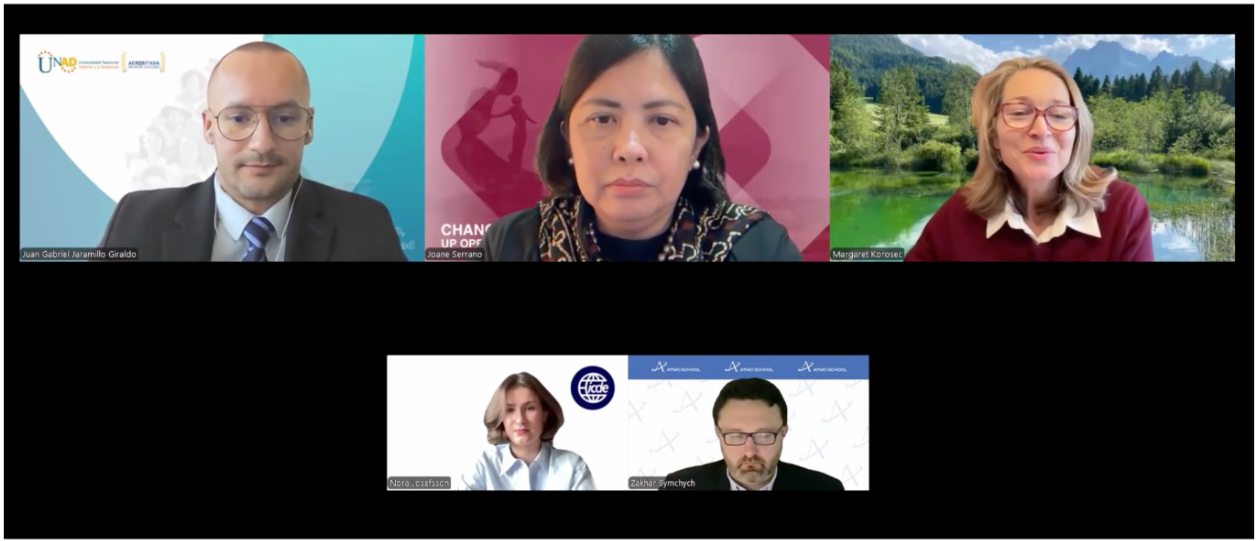
University of the Philippines Open University (UPOU) Chancellor Joane Serrano highlighted the importance of making online education genuinely accessible during the "Continuity in Education in a Time of Global Disruption" webinar, organized by the International Council for Open and Distance Education (ICDE) and the Knowledge Equity Network (KEN) on 24 November 2026.
The webinar brought together global perspectives on how higher education institutions (HEIs) and the wider education sector can respond to disruptions while maintaining access, inclusion, and opportunities for learners.
Dr. Margaret Korosec, Director of Digital Education and Learning Innovation at the University of Leeds and chair of the webinar, opened the session by emphasizing the importance of educational continuity amid global disruptions, including conflict, displacement, climate emergencies, and other crises.
Drawing on UPOU's three decades of experience in open and distance education, Dr. Serrano discussed how the university has sustained educational delivery in a country frequently affected by geographical, socioeconomic, and environmental disruptions. She emphasized that keeping universities operational is not enough; institutions must also ensure that learners have the resources, opportunities, and support they need to continue their studies.
Making online education genuinely accessible
Dr. Serrano stressed that making education available online does not automatically make it accessible, highlighting the need for mechanisms that allow learners to access course materials through different means. "Online does not automatically mean accessible... we really have to provide an enabling mechanism so that learners will be able to access their materials and course content in whatever ways possible," she said.
Echoing this point, Juan Gabriel Jaramillo Giraldo, Head of the Asia-Pacific International Project at Universidad Nacional Abierta y a Distancia (UNAD) in Colombia, emphasized that educational continuity requires more than technological infrastructure. "Ensuring educational continuity, particularly in times of crisis, requires much more than having a technological platform or simply moving academic content to an online environment," he said.
Following the presentations, the chair opened the moderated discussion, which explored lessons that other HEIs could adopt, the provision of learner support, and the role of open educational resources in reaching underserved communities.
Supporting learners through disruptions
On preparing for future disruptions, Dr. Serrano emphasized the need for institutions to plan ahead and anticipate different scenarios. She shared that UPOU is undertaking an initiative to assess its current situation and consider possible future developments, including geopolitical events and disasters. The exercise also involves students in anticipating challenges that could affect the university, the country, and the region.
Giraldo emphasized that flexibility should be built into educational institutions, not just treated as an emergency measure. He cited UNAD's established online learning model, which helped maintain academic continuity during the COVID-19 pandemic. He also discussed the university's response to a 2023 mining strike affecting more than 550 students, which included rescheduling practical sessions and field trips and exploring remote and simulated learning alternatives.
The discussion also highlighted the importance of understanding learners' circumstances and providing support beyond the availability of digital platforms. Dr. Serrano noted that asynchronous learning can offer flexibility to students facing unpredictable schedules or crises, but may also transfer much of the responsibility for managing learning to them. She stressed that institutional support must therefore accompany flexible learning arrangements.
Mr. Giraldo shared UNAD's response to a major earthquake in 2026 that affected four of its campuses, including psychosocial support, donations, and greater flexibility in academic activities. UNAD also provided technological equipment and internet connectivity to help restore services at the affected campuses. He emphasized that technology must be complemented by pedagogical strategies and people who can guide and support learners throughout the learning process.
Expanding access to learning
Chancellor Serrano also shared UPOU's experience in providing free massive open online courses (MOOCs) to overseas Filipino workers, including those working as teachers without the degrees required for formal recognition. These courses help them develop teaching materials and learn about emerging topics such as artificial intelligence. Some learners are in conflict-affected areas in Asia, where free resources provide additional learning opportunities.
Mr. Giraldo highlighted UNAD's initiatives in Colombia that use education to support reintegration and peacebuilding. These include the Arando la Educación project, which has provided learning opportunities in former territorial spaces, and the Traveling Teacher Program, which brings education directly to local communities, including peace agreement signatories and people undergoing reintegration. He noted that education can help rebuild lives, strengthen communities, and create pathways toward reconciliation.
Another point raised during the discussion was the recognition of prior learning, particularly for refugees and displaced people who may have lost the documents needed to demonstrate their educational qualifications. Dr. Serrano shared that UPOU is beginning to explore this concern following an invitation involving refugees in Southeast Asia who wish to enroll at the university but lack the necessary credentials. She expressed interest in learning from initiatives such as the University of Leeds' Mosaic program, which works to address barriers to university access for refugees.
Building resilient higher education
In closing, the speakers reflected on what a resilient higher education system should look like in the next five years. Dr. Serrano called on both open and conventional universities to become genuinely open to different kinds of learners, credentials, and learning pathways. Giraldo emphasized the need to prepare for conditions that differ from normal circumstances and strengthen international and governmental cooperation to ensure that institutions can continue serving students despite future disruptions.
The discussion reinforced the webinar's central message: educational continuity is not simply about keeping institutions or digital platforms operational. It requires institutions to understand learners' actual circumstances and provide flexible, accessible, and adequately supported opportunities for them to continue learning, whatever disruptions they may face.